Plan your formula, batch quantities and processing.
Explore reference formulas with batch calculations and processing steps. Define colour and sensory targets for your prototype.
Your formulation
Product → colour reference → formula → sample
% w/w
Reference formula: 2.5% AHE. You can calculate 0.05–2.5% or a base without AHE (0%). Confirm the suitable amount for your product separately.Request the current Formulation Guide ↗
Your formulation starting pointHair & Scalp→Shampoo→Colour, texture & sensory
Live formulation result
Alpine Clarity Shampoo
Colour references and sensory targets for your next matched lab comparison.
01 · ColourColour target still open
Light mineral starting point for choosing a target. This is not a prediction of this formula's colour. Select a reference below.
Choose a colour reference
Colour examples guide your choice. Confirm the colour in your complete formula; the images do not predict the result.
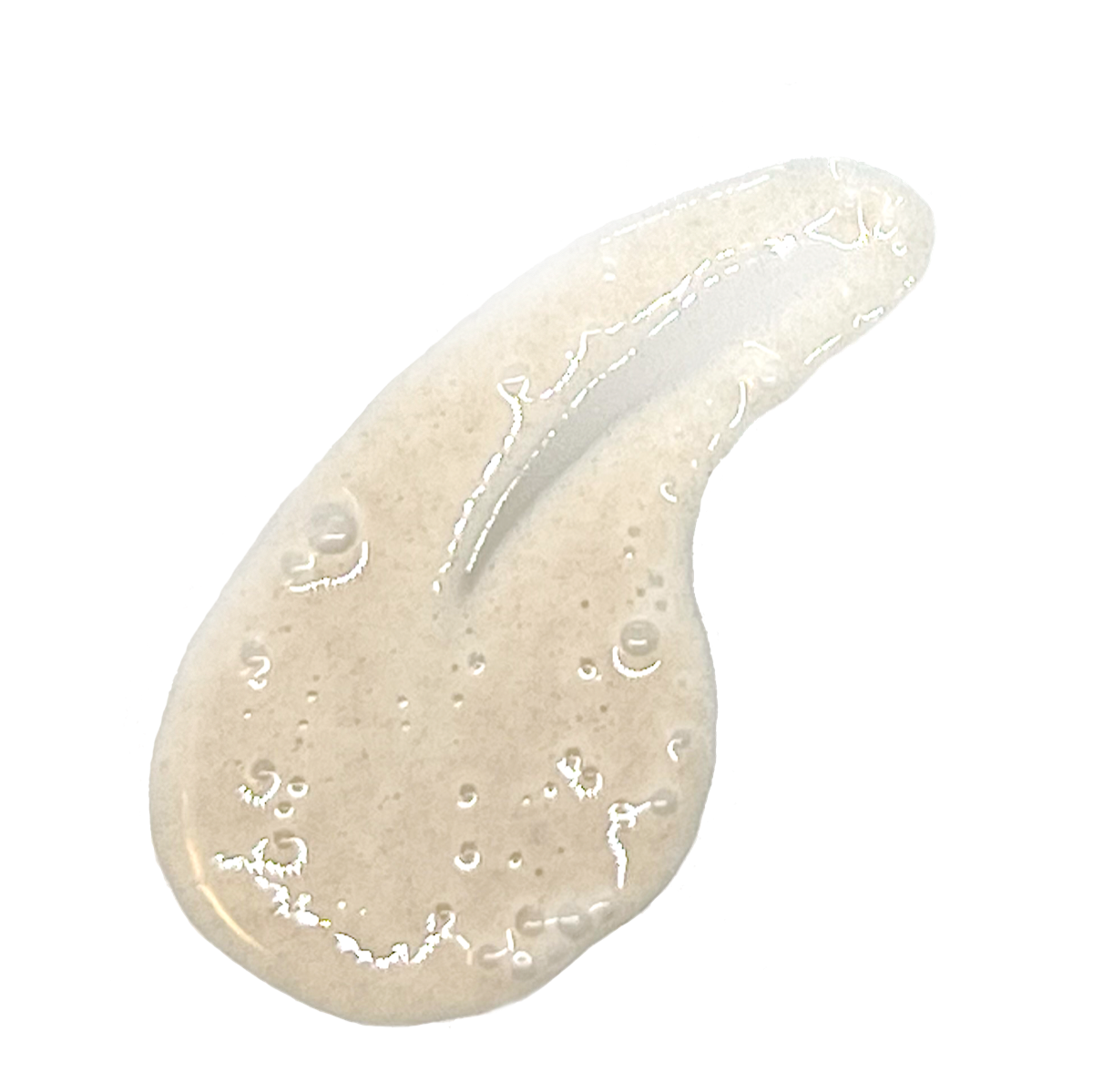
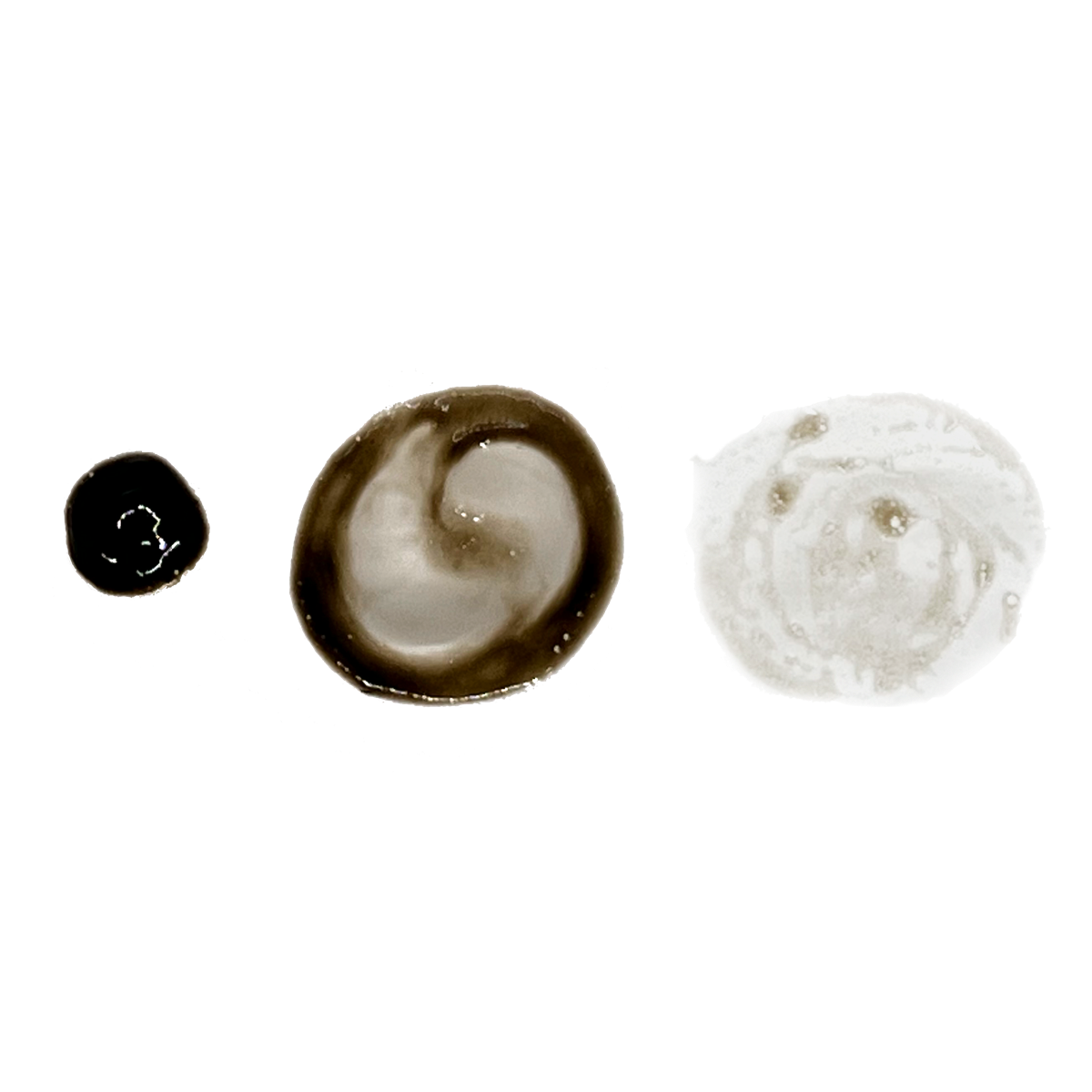
Source photograph · A documented finished-shampoo swatch remains pale and translucent even though the raw AHE material is dark. The image does not change with your dose or target.Exact appearance remains specific to this base, AHE level, process and lighting.02 · Touch & feelFresh foam, clean rinse and a refined salon-compatible look in pack.
01Controlled pour and distribution
02Fresh foam with adequate cushion
03Clean rinse and manageable fibre feel
Test these targets in the same base with and without AHE. They are not measured results for your formula.
03 · Odour / flavour
01Assess bottle headspace
02Rate fragrance and intrinsic notes during lather
03Check wet-hair and dry-hair residual separately
Compare the odour of samples with and without AHE before choosing fragrance or flavour. Keep the sample identities hidden during assessment.
Source formula: 0.8% Parfum / Aroma. Choosing an odour target does not change the ingredients. For an unfragranced comparison, both bases must be reformulated without fragrance.
04 · Quantitative formulaHair Shampoo · documented 2.5% calculation routeOpen percentage table, batch calculation and process skeleton
04 · Complete quantitative starting formula
Hair Shampoo · documented 2.5% calculation route
Older complete Premium Organic shampoo calculation formula; the separate tested 0.3% finished-product context is not this formula.
Displayed level2.5% AHE
Displayed formulaOriginal formula
Original referenceHistorical calculation formula · 2.5%
Enter the AHE amount agreed for your product to calculate the adjusted formula.
Swipe the formula horizontally to see function, percentage and batch weight →
Phase
INCI
Function
Without AHE % w/w
Source % w/w
1 kg batch
W
Aqua
Water / adjusted when AHE changes
48.700
46.200
462.00 g
W
Peat Extract
AHE
0.000
2.500
25.00 g
W
Levulinic Acid, Glycerin, Sodium Levulinate, Aqua
Preservation system
4.000
4.000
40.00 g
W
Glyceryl Undecylenate
Preservation support
2.000
2.000
20.00 g
W
Citric Acid
pH adjustment
0.250
0.250
2.50 g
D
Sodium Cocoyl Glutamate, Disodium Cocoyl Glutamate, Aqua
Surfactant
20.000
20.000
200.00 g
D
Argania Spinosa Kernel Oil
Oil
0.500
0.500
5.00 g
D
Phytic Acid, Aqua
Chelator
0.250
0.250
2.50 g
D
Sodium Stearoyl Glutamate
Co-surfactant
0.500
0.500
5.00 g
D
Tocopherol, Helianthus Annuus Seed Oil
Antioxidant
0.500
0.500
5.00 g
D
Capryl/Capramidopropyl Betaine
Surfactant
5.000
5.000
50.00 g
D
Decyl Glucoside
Surfactant
4.750
4.750
47.50 g
D
Lauryl Glucoside
Surfactant
4.750
4.750
47.50 g
D
Coco-Glucoside
Surfactant
6.000
6.000
60.00 g
T
Sclerotium Gum
Rheology / suspension
2.000
2.000
20.00 g
P
Parfum
Fragrance
0.800
0.800
8.00 g
Total
100.00
100.00
1000 g
Processing steps
01Heat the water phase to 60°C and the surfactant phase separately to 40°C.
02Disperse the rheology system into the water phase and homogenise.
03Cool under controlled stirring; add surfactants at 40°C and fragrance at 30°C.
04Finish homogenisation and compare clarity, deposition, foam, rinse and pack appearance.
Boundary: This is an older reference formula. A version with 0.05–0.30% AHE is a new trial formula, not the 0.3% shampoo used in the separate study.
Next development step
Alpine Clarity Shampoo
Does the selected AHE level achieve pale translucent appearance, refined foam, clean rinse and salon-compatible pack presentation in the complete Shampoo?
Available starting pointTested product formula
Study results are available for a specific formula. Your own formula needs separate testing.
ComparisonWithout AHE → with AHE
Compare the same base without AHE and with the AHE amount chosen for your product.
Project input · not a technical approvalAHE level to confirm
Request the current guide before batching; do not infer a universal level.
Project file & revisionsKeep a local project, compare revisions and prepare your Decision Brief
Loading local project tools…
Test detailsView comparison, formula references and test stepsHair & Scalp · Shampoo · Colour, texture & sensory
Test labels: C0 means the base without AHE; T1 means the matching base with AHE.
Documented concept routeHair & Scalp · Shampoo
Decision question
Does the selected AHE level achieve pale translucent appearance, refined foam, clean rinse and salon-compatible pack presentation in the complete Shampoo?
01
Formulation inspiration
Turn documented formulation context into a product direction of your own.
Concept seed · not a product claim
Alpine Clarity Shampoo
A shampoo that surprises: dark raw material translated into a pale, translucent finished formula.
Closest because the same finished-product format has a documented AHE context.
Reference maturityM3 · Tested product formula
Study results are available for a specific formula. Your own formula needs separate testing.
Reference context0.3% AHE in the tested formulaShown for orientation. It does not populate the project level.
Format architectureThe three system decisions to carry into C0 and T1.
01Complete surfactant base
02AHE + conditioning and rheology system
03Comparison against the defined finished-product reference
Carry forward
The format architecture, the closest documented context and the comparison logic.
Revalidate in your batch
Use as the closest tested bridge; the performance context remains attached to this shampoo.
Compare 1 other relevant route
Documented guide concept
Shampoo guide route
2.5% AHE guide concept
Surfactant and foam system · AHE addition and distribution route · Rheology, deposition, rinse and package checks
Treat the level as guide-formula specific and compare it with the lower tested-formula precedent.
Best cases are used as decision support, not as borrowed product proof. Customer names, trade names and logos are omitted. The planned AHE level, complete formula, process, stability, safety, package, performance and claims remain project-specific gates.
02
Comparison design
Run a matched comparison, not an isolated AHE sample.
C0Reference
Complete matched base without AHE
T1Decision batch
Same base + AHE at the approved project level
T2Only if required
One adjusted level only after the target colour and sensory window is written down
Change only
AHE presence and planned project level · Route focus: pale translucent appearance, refined foam, clean rinse and salon-compatible pack presentation
AHE level
TO CONFIRM FROM CURRENT CONTROLLED GUIDANCE
Material reference
Record AHE lot, COA and specification revision at batching
Open the complete measurement plan
03
Measurement plan
Record the information that explains the result.
Format baseline
pH, viscosity and translucent appearance
Foam, distribution and rinse
Wet comb, residue and scalp feel
What to record
pale translucent appearance, refined foam, clean rinse and salon-compatible pack presentation
Appearance under fixed lighting and after the defined use step
Matched C0/T1 comparison: pH, viscosity and translucent appearance; Foam, distribution and rinse; Wet comb, residue and scalp feel
Explore other documented colour outcomesRaw material, BB cream, day cream, cleansing gel, shampoo and toothpaste
Original formulation colour evidence
Dark raw material. More than one finished colour outcome.
Vehicle, opacity, pigments, AHE level, process and use state shape the finished expression.
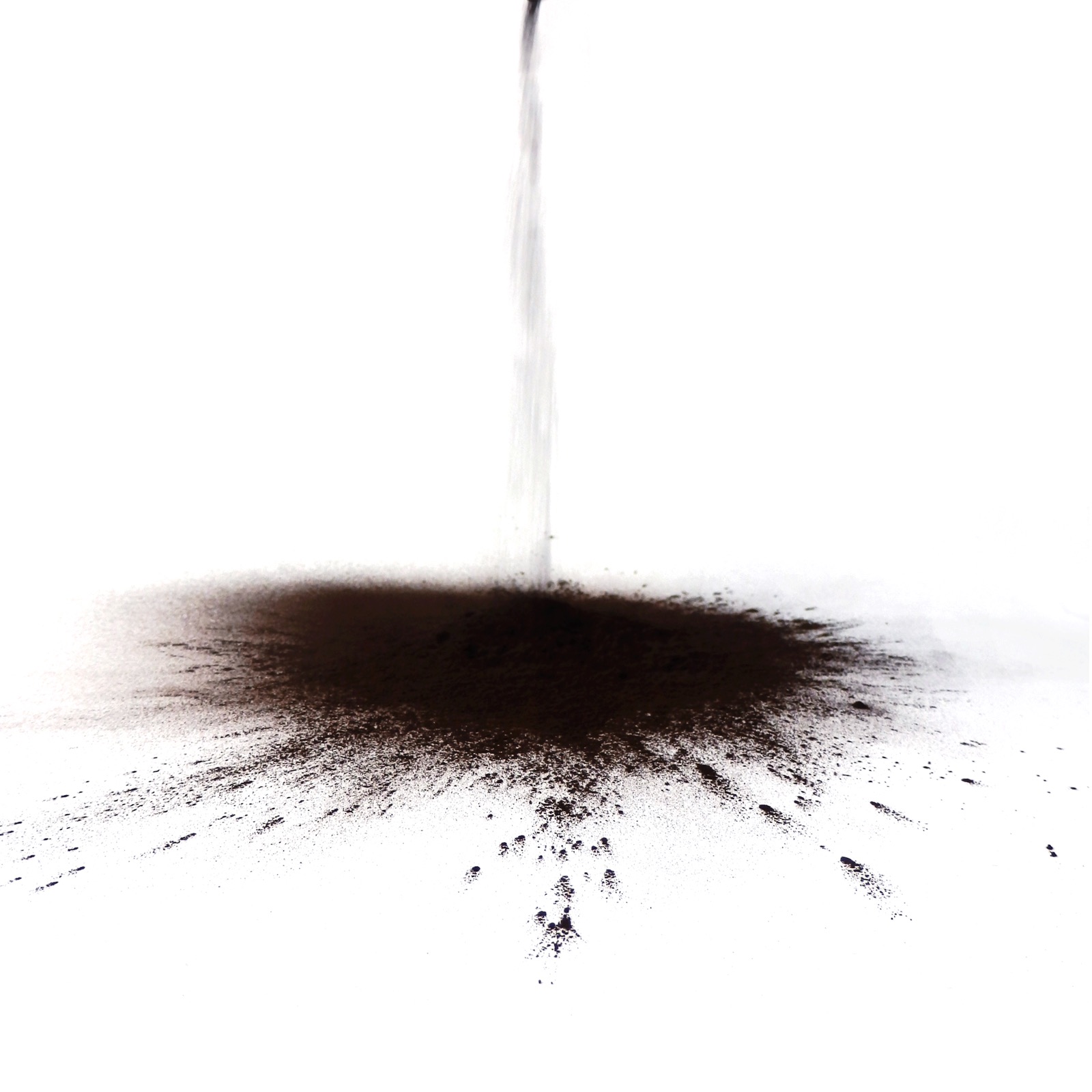
Raw-material referenceRaw AHEThe starting material is dark brown. It does not determine the finished formula colour on its own.
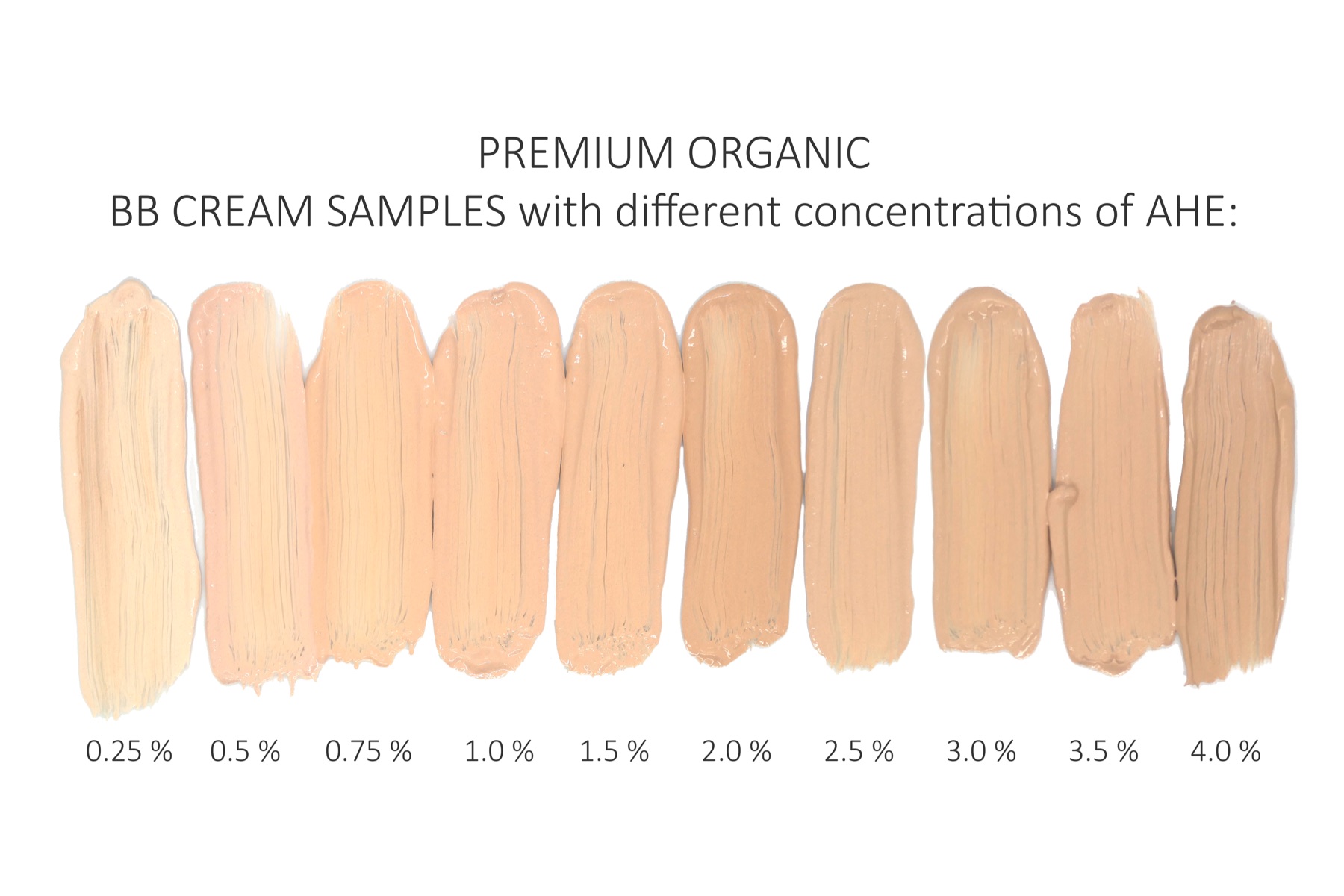
Original guide-formula colour ladderBB cream · 0.25–4.0%Same complete base and pigment system across the photographed level ladder. Colour evidence only; not blemish-efficacy evidence.
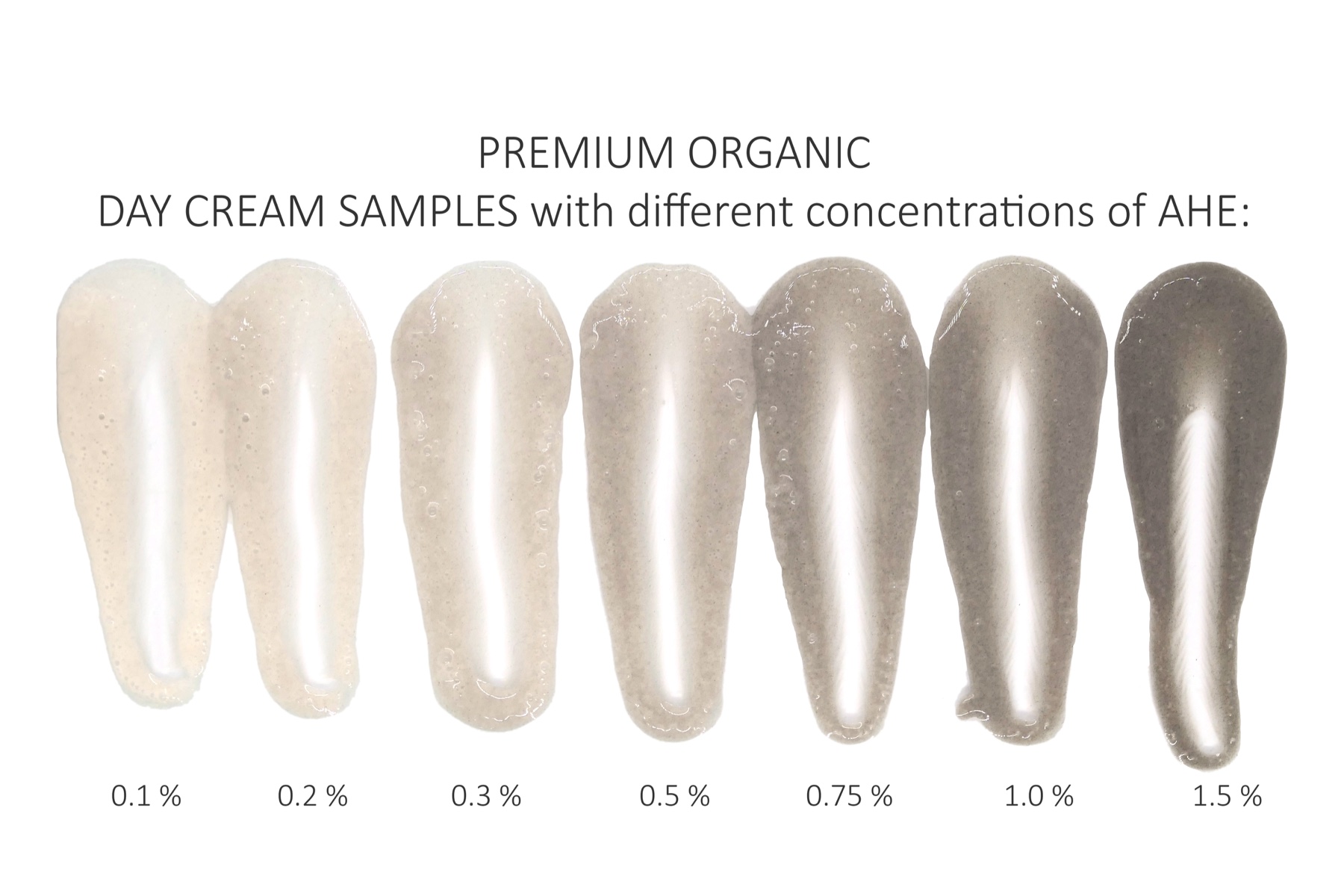
Original guide-formula colour ladderDay cream · 0.1–1.5%The photographed range belongs to this emulsion and its defined level ladder.
Original formula and use-state comparisonCleansing gel → foamVehicle and use state visibly change the material expression in this documented cleanser route.
Original finished-formula swatchShampooThis pale translucent result is specific to the photographed shampoo formula, level and process.
What this proves: a dark ingredient does not force one dark finished-product aesthetic. What it does not prove: a universal shade prediction. Confirm colour in the matched batch under fixed lighting.
Reference libraryOpen formulation parameters and mapped format breadth02
For the R&D team turning an idea into its own base
Keep the material and process choices visible.
Six parameters connect the creative direction to the complete base while ingredient specification, guide experience and finished-product responsibilities remain separate.
Current ingredient specification
Request current version
Use the controlled specification applicable to the project and supplied material.
Formulation vehicle
Define the complete system
Vehicle, water phase, rheology and other materials can change dispersion and appearance.
Addition and process
Confirm for the format
Review order of addition, temperature history, shear and homogenisation for the complete formula.
Colour and texture
Evaluate in the exact base
AHE load, base colour, opacity, particle distribution and packaging visibility shape the final expression.
Low-viscosity formats
Plan physical stability
Assess settling, redispersion, use instructions and packaging in the target system.
Finished product
Validate independently
Confirm stability, microbiology, safety, packaging, performance and claims.
03
Mapped formulation breadth
One Alpine material can lead to very different product experiences.
Use this index when the selected Studio route needs an adjacent format reference.
Area
Documented format
Inspiration status
Use
Skin care
Day cream sensitive
Mapped concept seed
Open the concept seed; request the current route; validate the complete product
Complexion
BB cream / skin tint
Complete guide formula + photographed 0.25–4.0% ladder
Open the concept seed; request the current route; validate the complete product
Complexion
Face powder / compact
Complete 1% guide formula
Open the concept seed; request the current route; validate the complete product
Cleansing
Cleansing gel
Mapped concept seed
Open the concept seed; request the current route; validate the complete product
Cleansing
Purifying foam cleanser
Mapped concept seed
Open the concept seed; request the current route; validate the complete product
Masks
Wash-off / peel-off concepts
Mapped concept seed
Open the concept seed; request the current route; validate the complete product
Colour
Compact foundation
Mapped concept seed
Open the concept seed; request the current route; validate the complete product
Oral care
Toothpaste
Mapped concept seed
Open the concept seed; request the current route; validate the complete product
Oral care
Mouthwash
Mapped concept seed
Open the concept seed; request the current route; validate the complete product
Hair care
Shampoo / conditioner
Mapped concept seed
Open the concept seed; request the current route; validate the complete product
Scalp care
Scalp mask
Mapped concept seed
Open the concept seed; request the current route; validate the complete product
02
Controlled handover from concept to validation
Four gates keep a precedent from becoming an unsupported promise.
Define, select, introduce and validate—then carry the finished brief into the responsible project review.
01
Define
Set format, target market, sensory direction and evidence question.
02
Select
Choose the closest published precedent within its actual context.
03
Introduce
Add AHE according to the formula-specific phase and process.
04
Validate
Test the complete product, packaging and intended market communication.
For the formulator ready to turn one direction into a prototype
Choose the idea that fits. Bring the exact unresolved question. Build a formula of your own.